
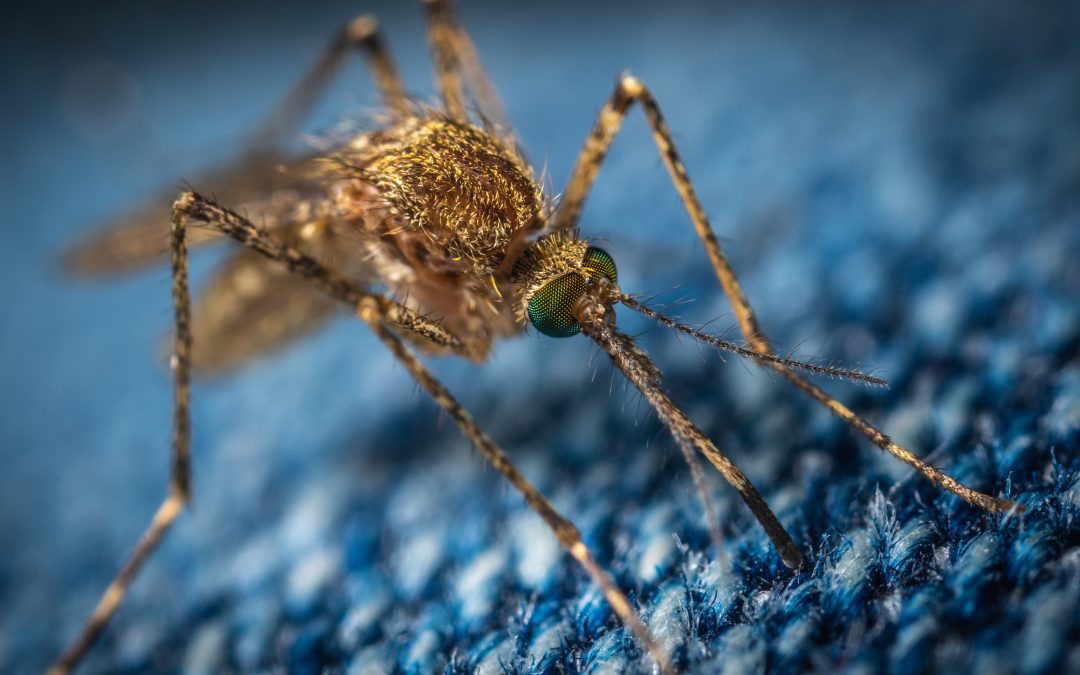
Traditional understanding holds that only female mosquitoes consume blood, which provides the nutrients necessary for egg production, while males rely solely on plant sugars for energy. This binary distinction underpins much of mosquito biology and vector control research. However, our view regarding this aspect of mosquito biology may be changing. A recent study challenges this long-standing belief in medical entomology: that male mosquitoes never feed on blood. In the study, researchers investigated whether male mosquitoes might feed on blood under specific environmental conditions, particularly when dehydrated and facing limited access to their typical sugar sources. They focused on two species often involved in disease transmission: Culex tarsalis, a common vector for several arboviruses in North America, and Aedes aegypti, a key vector for diseases such as dengue, Zika, and yellow fever.
Using a controlled feeding system, the scientists presented dehydrated male mosquitoes with a source of vertebrate blood. Surprisingly, when deprived of adequate water and sugar, male mosquitoes from both species showed willingness to take up blood from the feeder. Though they could not penetrate host capillaries due to anatomical limitations, many males attempted to probe and ingest blood. This finding contradicts the strict “anhematophagy” (non-blood-feeding) paradigm that has dominated mosquito biology. The team also found that dehydration increased attraction to and interaction with blood sources. Males with impaired humidity sensing did not show the same feeding behavior, indicating that environmental stress triggers the blood-seeking response. These behaviors had measurable consequences: dehydrated male mosquitoes attempted to feed more frequently than their non-dehydrated counterparts, and in some cases succeeded in drawing blood into their proboscis.
While traditional models view male mosquitoes as ecologically irrelevant to pathogen transmission, this work suggests that the behavior of males under stress might be more complex than previously thought. Even if males rarely access blood in natural conditions, this behavioral flexibility highlights how environmental pressures can drive unexpected feeding strategies. The authors are careful to note that blood-feeding per se does not immediately imply disease transmission from males because successful pathogen uptake and subsequent infection require specific biological compatibility inside the mosquito. The male mosquito’s digestive system and immune defenses may not support replication of bloodborne pathogens in the same way a female’s does. However, the behavioral findings challenge researchers to revisit existing assumptions and consider the evolutionary and ecological implications of male feeding flexibility.
They also highlight that future investigation is necessary to determine whether similar behaviors occur in wild populations under natural stressors, such as drought or limited sugar availability. They also suggest exploring potential molecular or sensory triggers for this shift in feeding behavior, and what role (if any) such behavior might play in mosquito ecology, longevity, and disease dynamics. Overall, this study provides evidence that male mosquitoes can and will attempt to feed on blood when dehydrated, breaking with decades of entomological doctrine and opening new lines of inquiry into mosquito physiology and behavior.
Powers Scientific has been helping advance insect research like this for over 30 years with Drosophila and Small Insect Chambers that are great for applications involving mosquito rearing, such as studies on vector biology, vector-parasite interactions, insecticide susceptibility, vaccine studies, genetic studies, etc. Our chambers have a 15-60°C programmable temperature range, making them flexible for a multitude of applications. The Level 3 chambers are controlled by thermoelectric (Peltier) coolers and come equipped with ultrasonic humidity generators capable of providing up to 80% relative humidity. Programmable (and optionally dimmable) digital clock-controlled LED lighting is also included on the Level 2 and 3 models for complete control over lighting conditions in the chamber.
For more information, see our Drosophila and Small Insect Chambers product page, visit our Contact Us page, or call us at (800) 998-0500.